A home inspection in Arizona is a visual check of the systems an inspector can see and reach: structure, roof, plumbing, electrical, heating and cooling, built-in appliances, and the interior and exterior. It does not open walls, does not cover everything, and under the standard Arizona resale contract you normally have 10 days from acceptance to finish it and decide what to ask for.
What the inspector looks at
Arizona home inspectors are certified through the Arizona State Board of Technical Registration and work to the state's standards of practice. A typical report covers:
- Roof. Covering, flashing, visible underlayment problems, signs of leaks.
- Structure. Foundation, visible framing, attic, signs of movement.
- Exterior. Stucco, siding, grading and drainage, windows and doors.
- Plumbing. Supply and drain lines that are visible, fixtures, water heater, water pressure.
- Electrical. Service panel, visible wiring, outlets, grounding, safety devices.
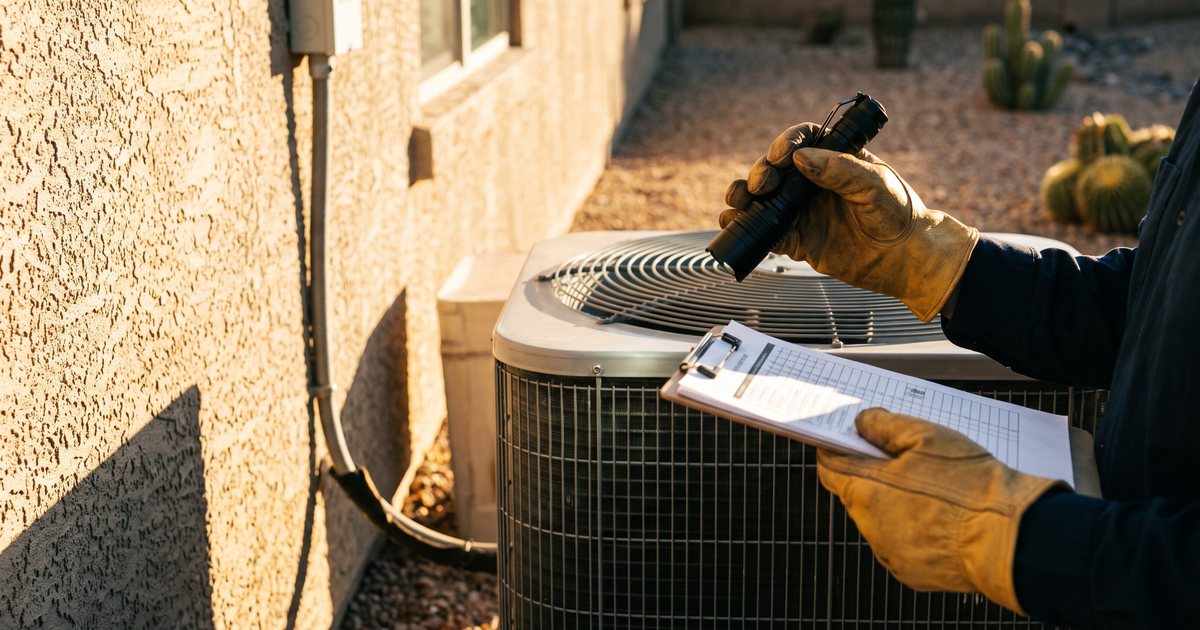
- Heating and cooling. Whether the system runs, the temperature split, the visible condition and age.
- Interior. Walls, ceilings, floors, doors, built-in appliances.
The report is a list of observations with photos. It is not a pass or fail grade, and it is not a repair estimate.
What it does not cover
This is where Arizona buyers get surprised. A general inspection usually excludes or only touches:
- Anything hidden behind walls, under slabs or below ground.
- The sewer line from the house to the street.
- Pools and spas, beyond a basic look, unless you add them.
- Termites and other wood-destroying organisms.
- Mold, radon and air quality testing.
- Septic systems and private wells.
- Solar equipment performance.
- Whether additions were permitted.
The add-on inspections worth considering here
Not every house needs every one of these. The age and type of the home tell you which matter.
- Termite inspection. Subterranean termites are common across the Valley. VA loans typically require a termite inspection in Arizona, and many buyers order one on any loan.
- Sewer scope. A camera run through the drain line. Worth it on older homes and anywhere mature trees sit near the line.
- Roof inspection. Tile roofs often outlast the underlayment beneath them. A roofer can tell you what the general inspector cannot.
- HVAC evaluation. Summer is hard on equipment. A unit near the end of its life is one of the larger costs a buyer inherits.
- Pool inspection. Equipment, surface, deck and barriers.
- Septic and well. Arizona has its own transfer rules for septic. See Arizona Septic Transfer Inspection and Well Water and Your Mortgage.
The clock: 10 days and the repair request
The Arizona Association of REALTORS resale contract sets a default inspection period of 10 days after acceptance. The two sides can agree to a different length, so read your own contract. Inside that window you:
- Complete every inspection you want. Schedule the general inspection in the first two or three days so there is time for follow-ups.
- Review the seller's disclosure statement and anything else you were given.
- Deliver the Buyer's Inspection Notice and Seller's Response, known as the BINSR.
On that form you choose one of three things: accept the property as it is, cancel, or list the items you want corrected. If you ask for repairs, the seller normally has five days to respond, and you then have five days to accept the response or cancel. Miss the deadline and you are generally treated as having accepted the property.
Your earnest money is tied to these dates. See Earnest Money in Arizona.
What to ask for
Sellers respond best to a short, serious list.
- Lead with safety and function. Active leaks, electrical hazards, a failed air conditioner, roof leaks, plumbing that does not drain.
- Skip the cosmetic items. Scuffed paint and loose cabinet pulls weaken a request.
- Be specific. Name the item, the location and the fix, and ask that licensed contractors do the work with receipts.
- Consider a credit instead. A credit toward closing costs lets you choose the contractor. Lenders limit how credits can be used, so ask your loan officer how to write it before you send the form. See Seller Concession Limits by Loan Type.
How the inspection relates to your loan
The inspection is for you. The lender does not require it and usually never sees the report.
The appraisal is a separate visit ordered by the lender. It is about value, though the appraiser also notes obvious condition problems. On FHA and VA loans the appraiser checks minimum property standards, and items like peeling paint on older homes, missing handrails or a roof at the end of its life can become conditions that must be fixed before closing. See FHA Appraisal Repairs and VA Appraisal, Tidewater and MPRs.
If the inspection uncovers something that changes the price or the repair plan, tell your loan officer the same day. A renegotiated price or a new credit changes the loan and has to be reflected in your disclosures.
New construction is not exempt
A new home has never been lived in, which means nobody has found its problems yet. An independent inspection before the drywall goes up and another before closing is inexpensive protection, and a third near the end of the builder's first-year warranty gives you a punch list while the builder still has to act on it.
Before you hire an inspector
- Confirm the certification with the Board of Technical Registration.
- Ask for a sample report. Photos and plain language matter.
- Ask what is excluded and what add-ons cost.
- Attend the last half hour. Seeing the shutoff valves and the panel in person is worth more than the report.
Why ask me
- I answer the question before I sell you anything. If renting, waiting or a different program is the better move, I will say so.
- Real numbers, not a calculator guess. I price your actual scenario, side by side, with the fees on the page.
- Every program under one roof. Conventional, FHA, VA, jumbo, and non-QM options like bank statement, DSCR and asset-based loans, so the program fits you instead of the other way around.
- You talk to the principal. Ricky Khamis is President of EPiQ Lending, NMLS #173141, lending in Arizona since 1999 and a 2025 Presidents Club Winner at CMG Home Loans. Direct line: (480) 999-9842.
EPiQ Lending is NMLS #1936984, at 7975 N. Hayden Road, Suite A-101 in Scottsdale. Verify all of it before you trust any of it: Ricky's EPiQ Lending profile, the Scottsdale branch, and the license itself at NMLS Consumer Access. Hold every lender to that standard, including us.
More plain-English answers in the Mortgage Education library.
Equal Housing Opportunity. This is general information, not a commitment to lend or an offer to extend credit. Program guidelines, eligibility requirements and documentation standards vary by investor and change over time. Rates, terms and program guidelines change and depend on credit approval, property appraisal and other qualifying factors. Not all applicants will qualify. This is not legal or tax advice; consult a qualified professional about your own situation.
Find out which program actually costs you less
FHA, conventional and jumbo price the same borrower very differently once the mortgage insurance is compared across the years you will own the home. Tell me the shape of your file and I will run them side by side.
Looking at a specific home? Send me the address and I will run the numbers: rickykhamis.com/analyze